

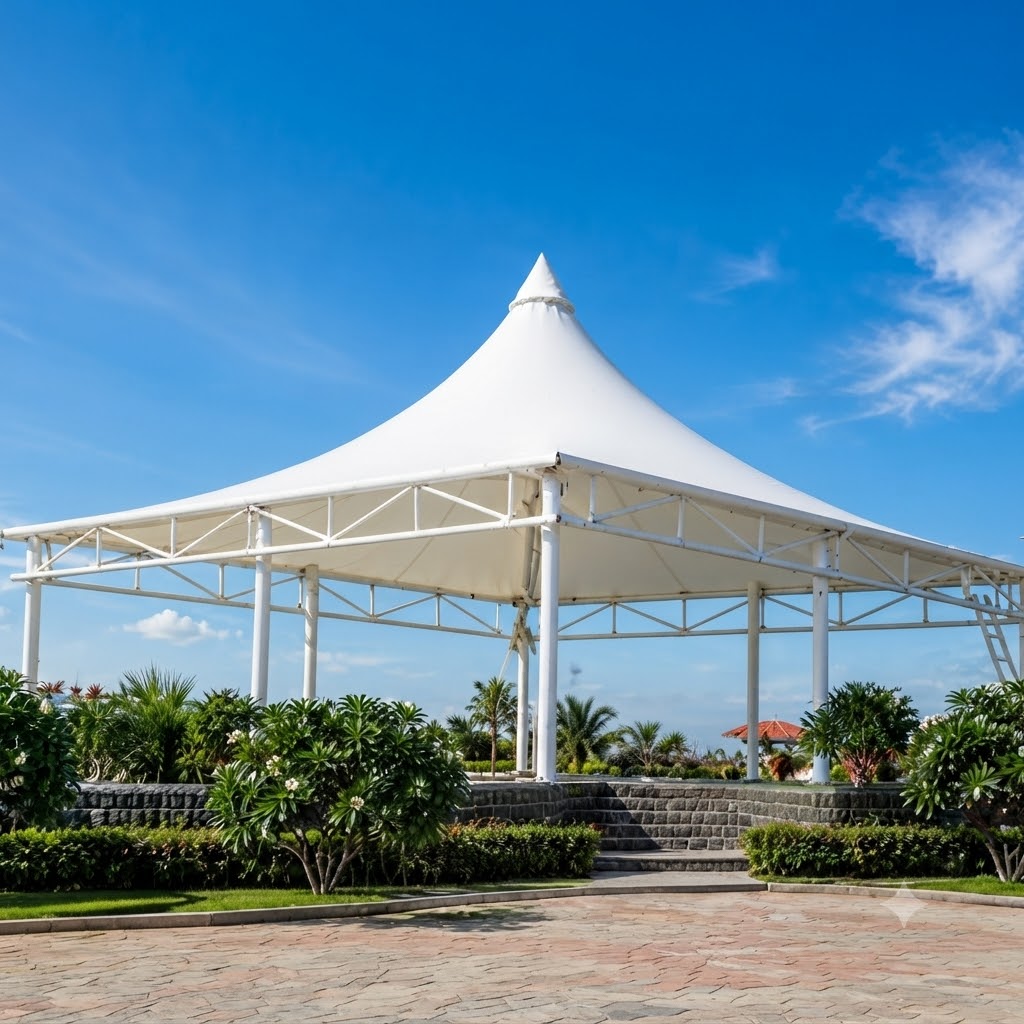


Ks Engineering works is leading Tensile Structure Manufacturers, Suppliers and Contractors in Hinjewadi. A tensile structure is a modern architectural solution designed to provide attractive, durable, and functional covered spaces. These structures are widely used in commercial, industrial, residential, recreational, and public areas.
With their lightweight design, aesthetic appeal, flexibility, and ability to cover large areas, tensile structures have become increasingly popular for applications such as parking areas, walkways, entrances, stadiums, swimming pools, warehouses, restaurants, and outdoor spaces. They can be designed in different shapes, sizes, and configurations according to specific project requirements.
A professionally designed tensile structure not only provides protection from sunlight and rain but also enhances the visual appearance and functionality of the property.
A tensile structure is an architectural system in which a flexible fabric or membrane is stretched under tension and supported by a structural framework. The tension applied to the fabric helps maintain its shape, stability, and load-bearing capability.
The structure typically consists of a tensile fabric membrane, steel columns, support cables, connectors, and anchoring systems. Depending on the design, the fabric can be shaped into curved, conical, dome-shaped, saddle-shaped, or custom configurations.
Tensile structures are commonly preferred because they require less structural material compared to conventional roofing systems while providing efficient coverage over large spaces. Their modern appearance and customization options make them suitable for a wide range of architectural and commercial applications.
A tensile structure works by distributing forces through tension rather than relying entirely on heavy, rigid construction materials. The fabric membrane is stretched tightly between supporting elements such as steel frames, poles, cables, or arches.
When external forces such as wind or rain act on the structure, the tensioned membrane transfers the load to the supporting framework and foundation. The curved or specially designed surface also helps distribute loads efficiently across the structure.
Proper engineering is essential to ensure that the tensile structure remains stable under different environmental conditions. Factors such as wind load, rainfall, fabric strength, structural support, and anchoring are considered during the design process.
As we are leading Tensile Structure Manufacturers in Hinjewadi, our Types are designed to meet different application requirements and industry standards, including the following types:
A high-quality tensile structure consists of several important components that work together to provide stability and performance.
Each component must be properly designed and installed to ensure the safety, durability, and long-term performance of the tensile structure.
Different materials can be used depending on the application, design, environmental conditions, and budget.
Common membrane materials include:
The supporting framework is generally manufactured using structural steel, galvanized steel, or other durable materials. Protective coatings may be applied to steel components to improve corrosion resistance and extend the service life of the structure.
Material selection plays an important role in determining the durability, appearance, maintenance requirements, and overall cost of the tensile structure.
As Tensile Structure Suppliers in Hinjewadi, we have advanced features that ensure high precision, durability, and consistent performance.
These features make tensile structures an efficient solution for organizations and property owners looking for functional and visually appealing covered spaces.
As Tensile Structure Manufacturers in Hinjewadi, our products provide several benefits including consistent quality, smooth finish, and long service life.
Tensile structures also offer excellent architectural flexibility. They can be designed in unique and creative shapes that may be difficult to achieve with conventional roofing materials.
Other benefits include:
As Tensile Structure Suppliers in Hinjewadi, our all types are used in various types of industrial sectors such as:
Common applications include:
The design of the structure can be customized according to the specific requirements of each application.
One of the biggest advantages of tensile structures is their design flexibility. Every project may have different requirements related to space, coverage area, aesthetics, environmental conditions, and functionality.
Customization options may include:
A properly planned design ensures that the tensile structure complements the surrounding architecture while delivering the required performance.
Conventional roofing systems often require heavy materials and extensive construction work. In comparison, tensile structures offer a lightweight and flexible alternative for many applications.
A tensile structure can provide wide coverage while creating an open and visually appealing environment. The fabric membrane can also allow controlled natural light transmission, reducing the need for completely enclosed spaces.
Additionally, tensile structures can often be installed faster than traditional concrete-based roofing systems. Their ability to support creative architectural designs makes them an excellent choice for projects where appearance is as important as functionality.
The installation process begins with understanding the project requirements and evaluating the installation location. Measurements, site conditions, and structural requirements are carefully analyzed.
The general installation process includes:
Professional installation is important to ensure proper tension, structural stability, safety, and long-term performance.
The cost of a tensile structure can vary depending on several factors. There is no single standard price because every project has different design and material requirements.
Important factors include:
A simple and standardized design may cost less than a large, highly customized architectural structure.
Regular maintenance helps extend the life and appearance of a tensile structure. The fabric surface should be inspected periodically for dust accumulation, damage, loose fittings, or other issues.
Basic maintenance practices include cleaning the membrane with suitable methods, checking the tensioning system, inspecting steel components for corrosion, and ensuring that drainage areas remain clear.
Any tears, loose connections, or structural issues should be addressed by experienced professionals. Proper maintenance can help maintain the safety, appearance, and performance of the structure over time.
As one of the leading Tensile Structure Contractors in Hinjewadi, we deliver premium-quality solutions designed to meet diverse industrial requirements. Here's why we stand out:
Our tensile structure solutions are developed with careful attention to:
Whether you require a tensile structure for parking, commercial spaces, walkways, industrial applications, or recreational areas, we can provide a solution tailored to your requirements.
Choose Ks Engineering works is leading Tensile Structure Manufacturers, Suppliers and Contractors in Hinjewadi. A tensile structure is an innovative and versatile roofing solution that combines modern design with practical functionality. Its lightweight construction, customizable appearance, wide-area coverage, and durable materials make it suitable for a broad range of commercial, industrial, residential, and public applications.
From car parking areas and walkways to sports facilities and outdoor commercial spaces, tensile structures offer an attractive alternative to conventional roofing systems. With proper design, quality materials, professional installation, and regular maintenance, a tensile structure can provide reliable protection and enhance the overall appearance of any property.
Choosing the right tensile structure solution allows you to create a functional, durable, and visually impressive covered space designed specifically for your project requirements.
A tensile structure is a lightweight architectural structure that uses tensioned fabric membranes supported by steel frames, cables, masts, or other structural elements. It is commonly used for roofing, shading, walkways, parking areas, and outdoor spaces.
Tensile structures are widely used for car parking sheds, entrance canopies, walkways, stadiums, outdoor seating areas, commercial spaces, swimming pools, and event venues.
Common materials include PVC-coated polyester fabric, PTFE-coated fiberglass fabric, HDPE fabric, steel pipes, structural steel, cables, and supporting hardware. The material is selected according to the project's design, environment, and durability requirements.
Yes. Properly designed and installed tensile structures can provide long-term performance. Their durability depends on the quality of the membrane, structural materials, fabrication, installation, maintenance, and local weather conditions.
Yes. Tensile structures are designed with suitable slopes, drainage provisions, structural supports, and anchoring systems to handle expected wind and rain loads. Engineering calculations are important for determining the appropriate design.